
UNJournal Kayla Lee | Korean food service brands are expanding their global footprint on the back of the Korean Wave (Hallyu), according to the Survey on the Overseas Expansion of Korean Food Service Companies, released by the Ministry of Agriculture, Food and Rural Affairs (MAFRA) on February 6.
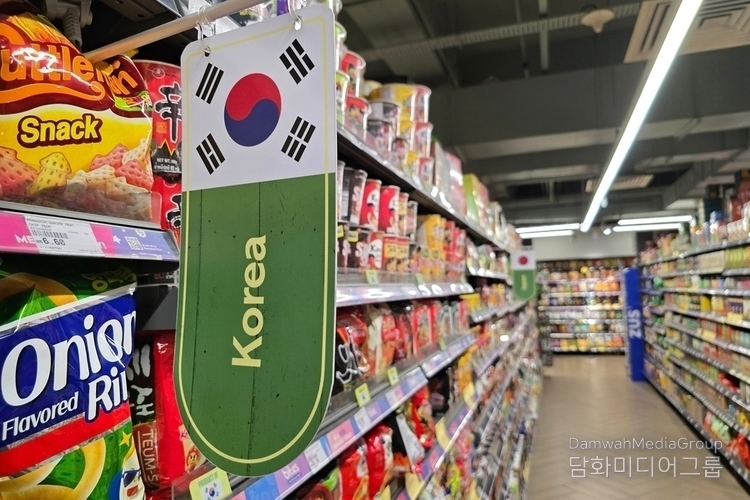
MAFRA reported on January 12 that total K-Food+ exports reached USD 13.6 billion in 2025, a 5.1% year-over-year increase. That broke down to USD 10.4 billion from agri-food products and USD 3.22 billion from agro-industry products (smart farms, agricultural equipment, pet food, veterinary medical products, etc.). Both figures were record highs, according to the statement, with ramyeon topping the product list at USD 1.5 billion in exports.
Despite the increased export volume in 2025, the February survey indicates that over the past five years, the number of Korean food service companies operating overseas decreased from 134 to 122 and the number of Korean food service brands operating overseas declined from 147 to 139. However, the number of countries they entered increased from 48 to 56. Also, the total number of overseas outlets operated by Korean food service companies rose from 3,722 in 2020 to 4,644 in 2025, representing growth of approximately 24.8 per cent.
The largest share of overseas outlets operated by Korean food service companies was located in the United States (23.8 per cent), followed by China (17.9 per cent), Vietnam (13.7 per cent), the Philippines (6.3 per cent), and Thailand (5.0 per cent). Southeast Asian countries have traditionally been strong markets. Taken together, the ASEAN countries actually accounted for the largest share (36.2 per cent).
One of the most notable findings of the survey is the shift in core markets. China, which ranked first in 2020 with 1,368 Korean food service outlets, saw a significant decline to 830 outlets in 2025 due to intensified local competition. In contrast, the U.S. market more than doubled over the past five years, reaching 1,106 outlets and solidifying its position as a new strategic hub for the Korean food service industry.
Success in the United States was driven primarily by mega brands. BBQ and Bonchon Chicken led the global K-Chicken boom, while Paris Baguette and Tous les Jours established a nationwide “K-Bakery Belt” across the country. The survey also listed the United Kingdom and France as emerging markets.
In Japan, where the number of Korean food service outlets grew by more than 68 percent, Korean food service has moved beyond a market centered on the Korean diaspora and has become a core cultural component of the so-called “fourth wave of Hallyu,” particularly among Generation MZ—a Korean term encompassing millennials and Generation Z. Chicken and beverage categories were identified as the main drivers behind the emergence of Japan as the tenth largest market.
Lotteria and Dookki Tteokbokki were highlighted as successful examples of business diversification, firmly establishing new categories such as K-Burgers and K-Snack Food.
Chicken restaurants and bakeries remained the first and second largest categories among Korean food service brands operating overseas, accounting for approximately 64 per cent of all overseas outlets (1,809 and 1,182, respectively). Korean cuisine restaurants ranked third. Pizza, hamburger, and sandwich outlets followed. The number of overseas coffee shop outlets increased as well.