-
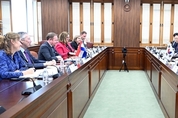
UN members Korea-Netherlands Launch Inaugural Foreign Affairs-Industry Dialogue
UNJournal Kayla Lee | The Republic of Korea (ROK) and the Kingdom of Netherlands held the first Korea–Netherlands 2+2 Foreign and Industry High-Level Dialogue on February 11 at the Ministry of Foreign Affairs (MOFA) in Seoul. On the ROK side were Minister of Foreign Affairs Cho Hyun and Trade Minister Yeo Han-koo of the Ministry of Trade, Industry and Resources. Minister of Foreign Affairs David van Weel and Minister for Foreign Trade and Development Cooperation Aukje de Vries represented the Netherlands. As both countries are bound by a Strategic Partnership, the dialogue addresses political, economic, and industrial issues from a comprehensive and integrated perspective, given the current global supply chain restructuring and intensifying technological competition. The ministers agreed in a joint statement released after their meeting that “the Republic of Korea – Kingdom of the Netherlands Strategic Partnership remains an invaluable instrument for guaranteeing sustainable growth capacity, economic security, and technological leadership, within a rules-based order, of both the Republic of Korea and the Kingdom of the Netherlands.” During the meeting, the ministers exchanged views on the changing global geoeconomic environment, the spread of protectionism, and ways to deepen bilateral cooperation on economic security; AI, cyber and emerging technologies; the semiconductor industry; critical raw materials.; and other areas. “Collaboration on early warning systems and export control consultations were deemed to have effectively strengthened the economic security of both countries,” according to the joint statement. Exchanges on supply-chain monitoring methods were considered a constructive step toward exploring future cooperation, and the ministers underscored the need to expand these initiatives and proactively identify new areas of economic security-related cooperation. In the digital domain, the ministers supported “cooperation to promote an open, global, interoperable, stable and secure cyberspace” and pledged to “further explore ways to strengthen the close partnership in deterring cyber threats, developing international law and norms, and enhancing cyber resilience.” In their joint statement, the ministers called the Responsible AI in the Military Domain (REAIM) process and the Artificial Intelligence in the Military Domain (AIMD) United Nations Resolutions important instruments for responsible AI within the military domain. They called for a regular bilateral working-level AI dialogue to explore cooperation on other aspects related to a responsible, safe, and human-centric approach to AI. The Ministers reconfirmed their intent “to further strengthen strategic cooperation on semiconductors by realizing closer linkages between the semiconductor ecosystems of both countries, including those between small and medium enterprises and R&D organizations and facilities.” With regard to recent supply-chain disruptions, the ministers highlighted the importance of continued discussion and cooperation on monitoring, diversification, as well as exchanges on stockpiling initiatives, according to their statement, adding that they support “the realization of sustainable, transparent, and secure supply-chains, including those for critical items and technologies.” The next 2+2 Foreign and Industry High-Level dialogue is scheduled for 2028 in The Hague, the Netherlands.
- Kayla Lee 기자
- 2026-02-12 17:17
-
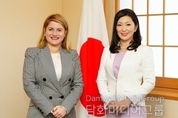
NGOs Korea and Italy to Hold Second Strategic Dialogue After Six-Year Hiatus
UNJournal Kayla Lee | On the afternoon of Wednesday, February 11, The Republic of Korea’s Vice Minister of Foreign Affairs Park Yoonjoo will hold the second ROK-Italy Strategic Dialogue with Italy’s Undersecretary of State for Foreign Affairs and International Cooperation Maria Tripodi, Korea’s Ministry of Foreign Affairs (MOFA) reported on February 5. The ROK and Italy established their Strategic Partnership in 2018, and the first ROK-Italy Strategic Dialogue was held in 2020, according to MOFA’s statement. MOFA pointed out that Italy is Korea’s fourth-largest trading partner within the EU and is visited by approximately one million Koreans each year. South Korea is the third largest export market for Italian products in the Asia-Pacific region, according to Italy’s Ministry of Foreign Affairs and International Cooperation. Italian Prime Minister Giorgia Meloni visited Seoul last month on January 19 for a summit with President Lee Jae-myung—the first Italian prime minister to visit Korea in 19 years, MOFA said. Speaking about the ROK-Italy Strategic Dialogue scheduled for this Wednesday, MOFA added, “At this strategic dialogue, which will be convened again after a six-year hiatus, the two sides will engage in in-depth discussions, based on the agreements reached at last month’s summit on ways to faithfully implement follow-up measures and further strengthen cooperation across a wide range of areas." Prior to her arrival in Seoul, Undersecretary Tripodi was in Tokyo February 9 to meet her Japanese counterpart, Parliamentary Vice-Minister for Foreign Affairs Yuumi Yoshikawa. Following that meeting, Vice-Minister Yoshikawa was reported to say that since their bilateral relations were upgraded to a "Strategic Partnership" at last month's Japan-Italy Summit, she would like to deepen cooperation in a wide range of fields going forward, as posted on Japan’s MOFA homepage. That report said the Italy-Japan discussions focused on security-related cooperation, such as the joint development of next-generation fighter aircraft by Japan, Italy, and the United Kingdom, as well as cooperation in cultural areas, including the Japan-Italy Film Co-Production Agreement. Korea’s MOFA announced that Vice Minister Park and Undersecretary Tripodi would discuss “trade and investment, advanced industries, and science and technology, as well as cultural and people-to-people exchanges” in Seoul on Wednesday.
- Kayla Lee 기자
- 2026-02-10 09:37
-
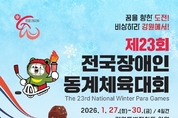
NGOs The Stage for Winter Paralympic Sports, The 23rd National Paralympic Winter Games Open
UNJournal Jon Lee | The Paralympic Winter Games, where athletes with disabilities can compete for their dreams and skills, will be held in Gangwon Province. This Paralympic Winter Games is sponsored by the Ministry of Culture, Sports and Tourism, organized by the Korea Paralympic Committee, and hosted by the Gangwon Special Self-Governing Province. It will run from January 27th to 30th. A total of 1,127 athletes from 17 cities and provinces will compete in seven sports. Cross-country skiing, biathlon, alpine skiing, and snowboarding events will be held at the Pyeongchang Alpensia Biathlon Stadium and Phoenix Park, while ice hockey and curling will be held at the Gangneung Hockey and Curling Center. Ice skating (short track) will be held at the Chuncheon Songam Sports Town Ice Rink. Since its inception in 2004, the Paralympic Winter Games, now in their 23rd year, have contributed to the spread of a culture of para-sports, enabling para-athletes to pursue their dreams, achieve their skills, and grow. Notably, many of Korea's top para-athletes, who will compete at the 14th Milan-Cortina d'Ampezzo Winter Paralympic Games in March, are expected to participate in this year's Games. Under the slogan "Challenge your dreams! Take flight in Gangwon!", all matches at this competition are free to attend. Detailed information, including the competition schedule and venue locations, can be found on the official website of the Paralympic Winter Games (chg.koreanpc.kr). For competition-related news and on-site stories, visit the official blog of the Korea Paralympic Committee (http://blog.naver.com/kosad_blog).
- Jon Lee 기자
- 2026-01-27 09:52
-

ArtsㅡCulture K-Graphy Brand Manifesto
UNJournal Jon Lee | The first letter, "K," is the national flag, "K" is not a letter of the alphabet. "K" is the accumulation of time that is Korea, a symbol condensed with the breath of history, spirit, and craftsmanship. "K" is no longer an adjective. "K" is the center, the starting point, the face of Korea facing the world. We put "K" first because it is not a matter of pride, but of responsibility. Graphy is language. Graphy is not the act of writing. Graphy is the way thought is expressed through lines. Lines before letters, shapes before words, the oldest language in which human thought is preserved. Graphy is not a record, but an expression, not information, but a trace of existence K-Graphy is a cultural declaration. K-Graphy is not a genre. K-Graphy is not a technique. K-Graphy is not a style. K-Graphy is a cultural declaration combining Korean thought and the language of the hand. We do not distinguish between writing and drawing. We do not question boundaries. Instead, we ask: Is there spirit in this line? Is there a time in this stroke? K-Graphy encompasses everything. It refers to all forms of expression, from bamboo brushes, to calligraphy, which inherits the spirit of tradition, to the lines and gestures that preceded written words, born from the boundaries between drawing and writing. It is not a list, but an integration. It is not a sum of techniques, but a flow of spirit. The moment you write, it becomes culture. K-Graphy does not demand perfection. It does not worship technique. The moment you draw a single stroke, your life, attitude, and perception of the times transcend individual expression and become culture. A child's first brushstroke and a master's last stroke are equal within K-graph. K-Graphy is a living language. K-Graphy is not limited to exhibitions. It becomes an educational tool, a record, a language of diplomacy, and an asset for the future. K-Graphy is the way Korean hands communicate with the world, a grammar of culture that transcends time. We declare: K-Graphy is a Korean graphic culture brand encompassing bamboo brush, hyeokpil, calligraphy, painting, and calligraphy. It is not a fad, nor a temporary project. K-Graphy is a living language that becomes culture the moment it is written.
- Jon Lee 기자
- 2026-01-19 15:16
-
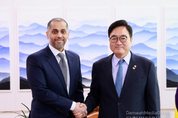
South Korea Speaker Woo Won-Shik meets with Ambassador Khalid bin Ebrahim Al Hamar of Qatar in Seoul
UNJournal Lee Sung Jun | Speaker Woo Won-Shik of the National Assembly of the Republic of Korea met with Ambassador Khalid bin Ebrahim Al Hamar of the State of Qatar at the Speaker’s Office in Seoul on the morning of January 8 this year. They discussed ways to expand economic cooperation between the two countries and resolve local challenges faced by Korean companies. The most notable outcome of this meeting was the progress made in the long-pending Doha Metro dispute. Last November, Speaker Woo became the first Republic of Korea National Assembly Speaker to make an official visit to Qatar, where he directly requested a resolution to the contract termination dispute between Samsung C&T and Qatar Railways. Following Emir Tamim's promise to review the matter, the dispute, which had persisted for over a decade, entered a substantive phase of resolution, with approximately 240 billion won in outstanding receivables recently deposited in a Qatari court. Chairman Woo expressed his special gratitude to Emir for the progress made toward a concrete solution. Strengthening strategic cooperation in defense industry and AI and requesting Emir's visit to Korea Since the two countries upgraded their relationship to a "Comprehensive Strategic Partnership" in October 2023, the scope of their cooperation has been expanding. Defense Industry Cooperation: Chairman Woo noted Emir Tamim's strong interest in Korea's outstanding defense industry capabilities and expressed his hope for the swift implementation of concrete cooperation measures. Expansion of Future Industries: Ambassador Al-Hamar responded that Chairman Woo's visit provided an important opportunity to explore specific possibilities for cooperation in strategic areas such as AI and the defense industry. Official Invitation: Chairman Woo formally requested Emir Tamim's visit to Korea and the National Assembly of the Republic of Korea at an early date. Ambassador Al-Hamar emphasized, "The Qatari government will more actively support Korean private companies and explore new opportunities for cooperation through close communication." Present at the meeting were Fatma Al-Mir, Secretary for Political Affairs, from Qatar, and Park Tae-Seo, Senior Secretary for Public Relations, Ko Kyung-Seok, Ambassador-at-Large for Foreign Affairs, and Koo Hyun-woo, Director-General for International Affairs, from our side.
- 이성준 기자
- 2026-01-09 14:06
-
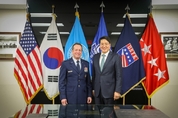
UN members The 205th ROK-U.S. Joint Committee of the Status of Forces Agreement Joint Press Release
UNJournal Jon Lee | Representatives of the Republic of Korea and the United States of America held the 205th Status of Forces Agreement (SOFA) Joint Committee Meeting at Camp Humphreys, Pyeongtaek, on 12 December, 2025. The ROK delegation was led by Director-General Hong Jeepio, North American Affairs Bureau, the ROK Ministry of Foreign Affairs. The U.S. delegation was led by Lieutenant General David R. Iverson, Deputy Commander, United States Forces Korea. During the discussions, the two sides reaffirmed the seven decade-long ROK-U.S. partnership, recognized the importance of the ROK-U.S. SOFA as a force enabler, and committed to supporting the evolution of the ROK-U.S. Alliance into a future-oriented, comprehensive strategic alliance in the face of an evolving regional security environment. The 205th Joint Committee acknowledged 24 months of active consultations on various alliance issues such as civil-military relations, environmental management, immigration, and the protection of U.S. military installations. The ROK and the U.S. also agreed to expedite the ROK-U.S. SOFA consultations related to the relocation and return of U.S. military bases in the ROK in accordance with the ROK-U.S. SOFA and related agreements. The ROK and the U.S. representatives recognized the Noise Mitigation Subcommittee’s efforts toward the second comprehensive noise evaluation survey to assess the impact of military operations on surrounding communities and their residents. Both sides agreed that various civil-military projects serve as a strong bridge connecting the peoples of the two countries and further consolidating the ROK-U.S. Alliance. The two representatives also spoke highly of the Disease Prevention and Control Subcommittee’s collaboration on actively exchanging information and policy consultations about infectious disease prevention and control. Finally, the two representatives, emphasizing that the ROK-U.S. SOFA remains a critical component of the ROK-U.S. Alliance, agreed to continue to closely discuss issues related to SOFA.
- Jon Lee 기자
- 2025-12-19 12:19
-
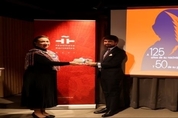
NGOs Instituto Cervantes in Seoul presented principal works of Guatemala's First Nobel Laureate in Literature
UNJournal Jon Lee | The Embassy of Guatemala in the Republic of Korea, in coordination with the Institute of Latin American Studies of Hankuk University of Foreign Studies (HUFS) and the Instituto Cervantes in Seoul, held a tribute to the Guatemalan writer and diplomat Miguel Ángel Asturias, Nobel Prize in Literature 1967, as part of the commemorative year dedicated to the laureate. The event, held on December 8 at the Instituto Cervantes in Seoul, was inaugurated by the institution’s representative, Renata Yujeong Hur, who highlighted the universal relevance of Asturias’s work and his enduring legacy within the Spanish-speaking literary tradition. The Ambassador of Guatemala, Sara Angelina Solís Castañeda, delivered opening remarks and presented a conference on the life, literary achievements, and diplomatic career of Miguel Ángel Asturias, underscoring his role as a cultural bridge between Guatemala and the world, as well as his commitment to identity, social justice, and literary creation. The Director of the Institute of Latin American Studies at HUFS, Dr. Shin Jeong-hwan (Tomás), offered remarks emphasizing the influence of the Guatemalan author on Latin American literature and the continued resonance of his work among new generations of readers in Korea. As part of the tribute, Ambassador Solís Castañeda symbolically presented the principal works of Miguel Ángel Asturias to the Cultural Affairs Officer of the Embassy of Spain, Mr. Raúl de la Rosa Machado, who accepted them on behalf of the Instituto Cervantes in Seoul. The gesture was in recognition of both institutions and their cultural cooperation. To conclude the program, attendees enjoyed an exhibition of traditional Guatemalan attire, along with a tasting of Guatemalan cuisine, offering diplomats, students, academics, and members of the Korean public an opportunity to experience the country’s cultural richness. The event was attended by ambassadors from Latin American countries, former ambassadors of the Republic of Korea, members of the Diplomatic Corps, Korean professors and students, as well as the Director of the Department of Spanish at HUFS. The Embassy of Guatemala expresses its deep appreciation to all participants for joining this tribute to the 1967 Nobel Laureate in Literature, whose work remains a benchmark of universal literature.
- Jon Lee 기자
- 2025-12-19 12:17
-

South Korea Must-see: thirsty vision of artist interrupted
UNJournal Jon Lee | In her touring retrospective, artist Hyo-Chong Yoo (87) envisions putting the sorrow, resentment and longing that haunt her paintings on full display at galleries in New York, Los Angeles and Seoul, the cultural centers of her two homelands. Each piece is connected to her mother Kim Kwan-Sum, hence the title “Samogok” (思母曲). This lyric poem from Korea’s Goryeo Dynasty lauds the primacy of maternal love and is delivered by “a female figure … who, even in the face of separation from her beloved, ultimately cannot (or does not want to) let go of the thread of hope”—in the words of Professor Park Sang Young, Daegu Catholic University. Yoo Dong-Sun, Yoo’s father, instilled an appreciation for art and passed on his natural talent. One of her earliest memories is her father teaching how to grind an ink stick against stone before drawing: “He’d keep repeating, ‘Concentrate. Be serious.’” She was just a little girl eager to go out and play, but she did as told, absorbing his mindset in the process. “He was very talented, but we couldn’t give his paintings away after he got out of prison. People were afraid of his tuberculosis,” she said. Yoo remembered her father being released in 1945 when he was too weak to be a threat to Imperial Japan. He died a few months later at age 42. Teaching farmers’ wives how to read and write Hangeul script was his offense, she recalled. The clandestine night classes were held at agricultural training facilities near their home in what is now North Korea’s South Hamgyong Province. He had sold off large rice fields to fund their construction, according to a 1939 Chosun Ilbo article Yoo keeps in a scrap book. “His sentence was severe because he threw a chair at the Japanese magistrate during the hearing,” Yoo lamented, her tone reflecting love and resentment—the recurring leitmotiv of her paintings. Another early childhood memory of her father involved his periodic trips to discuss “scholarly topics for a very long time” with the Benedictine monks who had a monastery near their home. “He’d rent an ox cart, load it up with apples and vegetables and take it to them. … My sisters and I were afraid of the monks’ long beards and brown robes.” Yoo’s mother told her that her father had been torn between joining independence figures like Kim Kyu-sik, who set up a Korean government in exile in Shanghai, or Choi Rin, who remained in Korea. Eventually, he chose to stay and help develop the human resources Koreans would need to build a resilient nation. “My father knew the Japanese would be defeated,” Yoo offered when asked for any post-prison memories of him. “I remember him telling my mother that his biggest regret was not living long enough to see the Japanese go.” The Kim clan to which Yoo’s mother belonged had a long line of notable figures throughout the history of Hamgyong Province, the artist explained. Unfortunately, all of them were on the wrong side of the class divide. Once the communists began to seize control, her mother reasoned that the best way to protect her three young girls was to hire a guide to lead them into South Korea in 1946. Kim Kwan-Sum abandoned everything. “We brought only what she and I could carry on our heads. My sisters were too small. My mother stuck some of my father’s drawings in her bundle,” Yoo recalled. Relatives helped them settle in Seoul’s Ahyeon-dong, but what little they managed to bring later perished when shells dropped during the Korean War set their neighborhood on fire. From her mother, Yoo inherited a life-time of inspiration. Kim Kwan-Sum sewed and knitted clothes to keep her daughters sheltered under one roof. Following the Korean War, there wasn’t always enough food, she explained, so Yoo and her sisters would play with orphans linked to a church that also fed refugees. When the church leaders discovered that the Yoo sisters could sing, they put them in a choir that regularly performed for the U.S. Armed Forces Korea. “I felt bad [for lying about being an orphan], but I figured we were helping them raise money.” The Yoo girls grew up and earned scholarship-funded degrees. The middle sister Suk Jung went to New Jersey to study nursing, got married, had three children and brought Kim Kwan-Sum over to watch them while she worked toward a Ph.D. Hyo-Chong, the eldest, got her B.F.A. and M.F.A. from Seoul’s Ehwa Womans University in 1961 and 1966, respectively. She then took a teaching position at the Ewha-affiliated Geumran Girl’s High School because it offered the chance to study in Paris or New York for a year, all expenses paid. In 1969, Yoo’s dream came true: She was awarded the academic year abroad in Paris. She also got a call from Suk Jung: Their mother had been diagnosed with cervical cancer and given six months to live. It was now Yoo’s turn to be the primary caregiver. She quit her job, gave up on Paris and moved to New Jersey. Yoo studied hard to pass the multitude of tests needed to secure herself a student visa for America. She wanted her mother to be able to receive advanced care and stay close to her daughters and grandchildren. Kim Kwan-Sum grew stronger, the six months passed into a year … then two … then 34. She succumbed to old age in 2003 at 93. “She outlived the doctor who gave her six months,” Yoo declared proudly with a laugh, calling it one of the miracles that have punctuated her life. While helping her mother, Yoo studied at the National Academy of Design and other art schools in New York—figure painting and human anatomy under Robert Phillipp, water colors with Mario Cooper, pastel painting with Daniel Greene, figure drawing with Robert Hale. In time, her work was exhibited in America, Korea and Europe, and she began to win prizes and coveted judging slots. She secured an adjunct professor position at Upsala in East Orange, NJ, in 1978 and worked her way up to a tenured position before the college closed in 1995. Seven of her students followed her to Centenary College (now University) in nearby Hackettstown the next year. In addition to teaching, she took administrative positions related to foreign recruitment before retiring in 2019. The whole time Yoo was with her mother, she found a ready—if not always willing—model. “I couldn’t afford to pay anyone,” Yoo explained. “’Didn’t you say the models at your school get a 15-minute break?’ my mother would ask me. I’d always get her to stay still until I finished.” After her mother passed, Yoo would do still lifes in pastels to capture “the traces” of her mother—her glasses, a bed cover she had knitted for Yoo as an early wedding gift. Yoo never married but has helped raise hundreds of children. For the students whom she taught the Western techniques acquired in New York and the Oriental Brush Painting skills picked up from her father, she established a gallery on campus where they could display their work and build confidence. For the foreign students she had lured to Centenary, she designed culture and language programs as well as excursions to help them adjust and feel welcome. Seeing Korean students struggle to fit into America in the same way she had was especially motivating, she explained. Yoo says it was only later when looking at her mother’s face in her numerous portraits that she saw the suffering—the pain of losing a husband and homeland, all the aches endured while providing for her daughters’ needs. “I was concentrating so hard to paint correctly that I never stopped to really look at her expression, but I can see it all so clearly now. That’s why I want this exhibition and why the title has to be Samogok.”
- Jon Lee 기자
- 2025-12-19 12:15
-
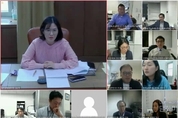
South Korea Foreign ministry holds a meeting with ROK diplomatic missions in U.S.
By UN Journal Kayla Lee The Ministry of Foreign Affairs held a meeting of economic officers from all Korean diplomatic missions in the United States on October 2, chaired by Director-General for Bilateral Economic Affairs Kim Sun-young. The meeting was convened to discuss ways to address visa-related difficulties faced by Korean companies and to strengthen coordinated cooperation between the Ministry and its overseas missions, with the overarching aim of ensuring a stable investment environment in the United States. Notably, the meeting followed the inaugural session of the Korea–U.S. Business Travel and Visa Working Group held on September 30. The officers were briefed on key outcomes, including clarification of the permissible scope of activities under the B-1 visa and ESTA, as well as plans to establish a dedicated “Korean Investor Desk” at the U.S. Embassy in Seoul. This provided front-line officers with an opportunity to deepen their understanding and enhance their capacity to support Korean companies. Director-General Kim emphasized that Korea’s rapidly expanding investment in the United States naturally leads to a sharp increase in personnel exchanges, making it more important than ever to ensure a stable environment for Korean businesses and workers. She urged missions to proactively engage with local offices of U.S. immigration enforcement agencies—including Immigration and Customs Enforcement (ICE) and Customs and Border Protection (CBP)—to establish working-level contacts, as agreed in the recent Working Group discussions, so that missions can take the initiative in supporting Korean companies. The Ministry of Foreign Affairs, together with its missions, will continue working closely with the U.S. side, including through follow-up meetings of the Korea–U.S. Business Travel and Visa Working Group, to pursue further institutional improvements. These efforts aim to provide Korean companies with a more secure investment environment in the United States and to actively alleviate their difficulties.
- Kayla Lee 기자
- 2025-10-13 16:45
-
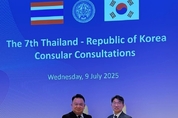
UN members The Korea-Thailand consular consultation held in Bangkok, Thailand
By UN Journal Kayla Lee Director-General for Consular Affairs and Safety Yoon Chu Sok held the 7th ROK-Thailand Consular Consultation in Bangkok with H.E. Mungkorn Pratoomkaew, Director-General of the Department of Consular Affairs of the Thai Ministry of Foreign Affairs on July 9, 2025. The two sides engaged in wide-ranging discussions on bilateral consular issues, including ▴enhancing the convenience of entry, exit, and stay for Korean nationals in Thailand, and ▴protecting Korean nationals residing in Thailand. Director-General Yoon emphasized that the bilateral relationship between the two countries, which entered into a strategic partnership in 2012, has developed in nearly every sector—including political, economic, and cultural—over the past 67 years since the establishment of diplomatic ties in 1958. He expressed his intent to further strengthen bilateral cooperation in consular affairs to deliver tangible results that benefit the citizens of both countries. Director-General Yoon noted the robust people-to-people exchanges, highlighting that the number of Korean visitors to Thailand in the previous year reached approximately 1.87 million—approaching the all-time high of 1.89 million recorded in 2019. He requested the Thai government’s continued interest and cooperation to ensure the safety and convenience of Korean nationals residing in Thailand. Director-General Yoon also expressed appreciation for Thailand’s active support in assisting the rescue of Korean nationals who were confined in neighboring countries due to employment scams earlier this year, and both sides agreed to further strengthen cooperation in cases involving Korean victims in the future. Furthermore, Director-General Yoon emphasized a need to closely collaborate in order to reduce the number of Thai nationals overstaying in Korea. Both sides shared the view that the protection and convenience of each other’s nationals through consular cooperation is of paramount importance, and that the latest consultation, held 17 months after the 6th meeting in Seoul, served as a valuable opportunity for in-depth discussions on strengthening bilateral cooperation in the consular field.
- Kayla Lee 기자
- 2025-07-11 12:04
-
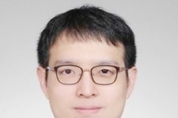
South Korea Dr. Shin Hee-seok appointed as member of UN HRC’s Working Group
By UN Journal Kayla Lee Dr. Shin Hee-seok, a legal analyst of the Transnational Justice Working Group (TJWG), was appointed as a member of the Working Group on Arbitrary Detention (WGAD) at the 59th session of the UN Human Rights Council (HRC) on July 8, 2025. The WGAD is one of the special procedures of the HRC and is composed of five members appointed from each of the UN’s five regional groups. The WGAD investigates cases of deprivation of liberty imposed arbitrarily or inconsistently with international human rights standards, and adopts an opinion as to the arbitrariness of the detention and presents necessary recommendations. Dr. Shin is the second Korean national to be appointed as a member of the WGAD. He is expected to contribute to the international community’s efforts for the promotion and protection of human rights, including addressing the issue of arbitrary detention. The Republic of Korea, as a member state of the HRC for the 2025-2027 term, is actively taking part in global efforts for the promotion and protection of human rights. The ROK government will continue to extend its support to competent Korean experts for their representation in the UN human rights mechanism.
- Kayla Lee 기자
- 2025-07-09 10:46
-
![[Damwha Column 曇華風月] Constitutional Court of Korea's decision and judicial trust](//www.unjournal.kr/data/cache/public/photos/20250207/art_17393245069456_2949e4_178x118_c0.jpg)
South Korea [Damwha Column 曇華風月] Constitutional Court of Korea's decision and judicial trust
By UN Journal Lee Jon-young In order to maintain a just society, the law must be operated based on fairness and trust. Dasan Jeong Yak-yong (丁若鏞, 1762-1836), a Silhak scholar of the late Joseon Dynasty who studied practical matters, wrote "Heumheumsinseo欽欽新書" and sought ways to rationally enforce criminal law and prevent unjust prison cases. This was part of efforts to improve the judicial system at the time and is considered an important guideline for fair trials. In modern society, securing fairness and trust in the judicial system is an important task, and legal measures such as the revision of the Criminal Procedure Act have been taken for this purpose. The Criminal Procedure Act, revised in 2020, stipulates that the suspect interrogation record written by the prosecutor is not accepted as evidence if the suspect denies its contents. This was a measure to strengthen the suspect's right to defense and increase the fairness of the prosecution's investigation. However, the Constitutional Court of Korea recently ruled in the impeachment trial of President Yoon Suk-yeol that, unlike in criminal trials, even prosecution records denied by the parties can be accepted as evidence. This decision is considered to be in conflict with the purpose of the 2020 revision of the Criminal Procedure Act and is causing controversy. President Yoon's side criticized this as a "regressive decision" and raised the question of whether the Constitutional Court, which is an institution that must follow the Constitution, is deceiving the people and violating the Constitution. In addition, if such rulings are repeated, the people will inevitably have doubts about whether they can trust the decisions of the Constitutional Court. In particular, if a judgment lacking legal consistency is made, it could have a negative impact on the fairness and reliability of the entire judiciary. The law must develop in accordance with the needs of the times, but at the same time, it must be operated based on public trust. There are criticisms that the Constitutional Court's decision this time needs to be reexamined not only in terms of legal legitimacy but also in terms of public trust. In order for the judiciary to restore fairness and trust, rational and consistent application of the law that the public can accept is essential. The interpretation and application of the law should not vary depending on specific political situations, but should maintain universal principles and consistency in order to gain the public’s trust. The principle of fair trials emphasized by Dasan Jeong Yak-yong is still valid today. In a modern democratic society, the law should not be for the benefit of a specific group or individual, but should be a tool for the trust and realization of justice for the entire public. Deep reflection is needed on whether the recent decision of the Constitutional Court has balanced the two factors of legal legitimacy and public trust, and more careful and consistent judgment is required in the future operation of the judiciary.
- Jon Lee 기자
- 2025-02-12 10:42
-
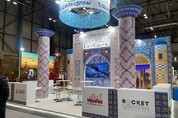
UN members Uzbekistan - Malaysia: new horizons for cooperation in tourism
UNJournal Jon Lee | The following article was contributed by Umid Shadiev, Chairman of the Tourism Committee, to Diplomacy Journal for publication through the Embassy of Uzbekistan in Seoul. -- Ed. Uzbekistan and Malaysia may be located in different parts of the world, in Central Asia and Southeast Asia, but we actively cooperate to develop in mutually beneficial ways. Tourism is a key area of our partnership. Despite the significant geographical distance between us, there is enormous potential for expanding ties in the tourism sector, which, in turn, will bring economic benefits and promote cultural exchange. Tourism plays a vital role in both countries’ economies, creating jobs, contributing to infrastructure development, and improving connections between our two nations. An important step in strengthening the tourism links between Uzbekistan and Malaysia has been the introduction of a visa-free regime for citizens of both countries, valid for up to 30 days. This has simplified travel and is a major factor in the increase in tourist flows. In 2023, 4,396 Malaysian tourists visited Uzbekistan, and in 2024, the number more than doubled to 9,464, indicating the growing interest in Uzbekistan as an attractive tourist destination for Malaysians. Another important component in this process was the appointment of Daler Yusuf as Uzbekistan's tourism brand ambassador to Malaysia in January 2019, which further strengthened our ties. Both countries have been paying great attention to strengthening the legal aspects of our tourism collaboration. In October 2023, during the 25th Session of the UNWTO General Assembly in Samarkand, a Memorandum of Understanding was signed between the Governments of Uzbekistan and Malaysia which laid solid foundations for expanding our cooperation in many areas of tourism. In 2024, a Malaysian delegation led by the Deputy Minister of Tourism, Arts, and Culture, Khairul Firdaus Akbar Khan, participated in the XII Session of the Islamic Conference of Ministers of Tourism in Khiva. This is just one example of how Malaysia and Uzbekistan are supporting each other in the international arena and implementing joint projects in tourism. The historical and cultural ties between Uzbekistan and Malaysia also positively influence our tourism cooperation. Both countries belong to the Islamic world and take great pride in our shared Islamic cultural heritage. This is an essential driver of pilgrimage tourism, which holds a special place in our hearts as well as our economies. Uzbekistan’s historic cities, such as Samarkand, Bukhara, and Khiva, were ancient centres of Islamic culture and learning. They attract pilgrims from all over the world, in particular from Malaysia. Malaysia has rich experience in organizing such tours, and thus is a priority partner for Uzbekistan. In recent years, Uzbekistan has made widespread efforts to create Muslim-friendly infrastructure, including new prayer spaces and Halal hotels and restaurants. This has contributed to growing interest of Muslim tourists — and not just Muslim pilgrims — in visiting Uzbekistan. Samarkand and Bukhara, as major spiritual and historical centres, attract both these groups with their culture, history, and hospitality. Looking back in time, I note that on February 21-23, 2019, a Malaysian delegation participated in the First International Forum on Ziyarah Tourism, held in Bukhara. This shows how long Malaysia and Uzbekistan have been supporting one another in this field. During the forum, the Mufti of the Malaysian state of Perlis, Mohd Asri Bin Zainul Abidin, was appointed as the Ambassador for Ziyarah Tourism of Uzbekistan. We are fortunate to have such a respected envoy. I want to talk now about areas with substantial potential for future development: this event is about looking forward. Ecological and educational tourism will be particularly important. Uzbekistan, with its diverse natural landscapes, including deserts, mountains, and oases, is an attractive destination for eco-tourism. Malaysia is known for its tropical forests and unique ecosystems, too. Both countries have enormous potential to attract tourists interested in nature and sustainable tourism. The joint development of this sector through exchanging experience should become a central aspect of bilateral cooperation. Educational tourism also holds great potential. Uzbekistan actively encourages academic exchange programmes, attracting students from around the world, including from Malaysia. Malaysian educational institutions can partner with Uzbek universities to implement joint educational programmes, which would further strengthen cultural ties and promote academic tourism. Direct flights between Tashkent and Kuala Lumpur play a vital role in increasing tourist flows. They provide convenience and comfort for travelers. In the future, we are planning to diversify routes and increase the frequency of flights, making trips between Uzbekistan and Malaysia even more accessible. Another promising area is the creation of twin-centre tour packages which include visits to both countries. They will be of particular interest to tourists wanting to combine a variety of cultural and natural attractions in a single trip. To successfully promote Uzbekistan’s tourism products in Malaysia we are actively collaborating with local media and influencers. In recent years, several press-tours have been organized for leading Malaysian television channels and media companies such as “Sulalatus Salatin” and “RTM Malaysia”, as well as for gastronomic bloggers. These steps help spread first-hand information about Uzbekistan's tourism potential in Malaysia. The documentary that a creative team from RTM TV made about pilgrimage tourism in Bukhara and the holy sites of the Fergana Valley has been especially popular. During the last couple of years, cultural exchanges between our countries have also intensified. In 2023, a photo exhibition titled “Uzbekistan — The Center of Islamic Civilization” was organized at the Islamic Arts Museum in Kuala Lumpur, introducing the unique cultural and historical landmarks of Uzbekistan to a wider Malaysian audience. In 2024, we presented Uzbekistan's tourism opportunities in Kuala Lumpur, as well as hosting B2B meetings for tour operators to discuss developing joint tour packages. We are committed to unlocking the full tourism potential of both Uzbekistan and Malaysia, that can be realized through joint efforts. Both countries possess a rich cultural heritage, unique natural resources, and experience in tourism development. It is important to note that both sides are actively working on expanding transport links, creating joint tourist packages, and promoting their tourism offerings in partner countries. Given the growing number of tourists, infrastructure advancement, and rising cultural ties, we are confident that tourism ties between Uzbekistan and Malaysia will only expand, bringing long-term economic and cultural benefits to both countries. In the coming years, tourism will open up new horizons for both countries and contribute to the strengthening of multifaceted bilateral ties.
- Jon Lee 기자
- 2025-02-04 10:28
-
Photo UN journal. 2024,December Jpg ,유엔저널 전체보기
UNJournal Jon Lee | UN journal. 2024,December. Jpg ,유엔저널 전체보기
- Jon Lee 기자
- 2025-01-13 12:20
-

Photo UN journal. 2024. November, Jpg 유엔저널 전체보기
UNJournal Jon Lee | 2024. November, UN journal. Jpg 유엔저널 전체보기
- Jon Lee 기자
- 2024-11-25 16:49
![[Damwha Column 曇華風月] Constitutional Court of Korea's decision and judicial trust](http://www.unjournal.kr/data/cache/public/photos/20250207/art_17393245069456_2949e4_178x118_c0.jpg)



Address: Doosan We've Pavilion 1203, Sambong-ro 81, Jongno-gu, Seoul
Date of first registration: Founded in 1996 as UN News, discontinued in 2009
Registration No.: Jongno Ra00610
Registration Date: Reissued on Sept. 18, 2023
Publisher: Damwha Media Group Chairman Lee Jon-young
Editor in Chief: Lee Jon-young/ Vice Chairman: Chung Bo-won/Standing Advisor Lee Keon-chan | Senior Editorial Writer Ko Jae-hwe/ Cultural Editor Lee Joon-seok/ Political Editor: Kayla Lee
Phone number: 02-3417-1010 | 02-396-5757
E-Mail: djournal3417@gmail.com

UPDATE: 2026년 02월 12일 17시 17분